
In the world of prize competitions, your website is basically your shopfront, your sales team, and your reputation all rolled into one slightly stressed browser tab. Get it right and everything else gets easier. Get it wrong and you're pouring ad budget into a leaky bucket.
Why good design is non-negotiable
Competition sites live or die on trust and ease of use. If your site looks like it was built during the dial-up era, people are far less likely to hand over card details for a chance to win anything more valuable than a toaster. First impressions online are brutal and instant - visitors decide whether to stay or bounce in seconds.
Good web design for competition sites needs to:
- Make it obvious what you do, who you are, and what's currently live.
- Guide visitors smoothly from homepage to picking a competition to checkout, without weird dead ends or confusing layouts.
- Clearly display legal information, free entry details, and terms in places people expect to find them.
- Load fast and work well on mobile - the majority of competition traffic comes from Instagram and Facebook ads, which means mobile-first is not optional.
All of this reduces friction - and every tiny bit of friction costs you entries.
Build vs buy: your tech stack options
Custom build
Pay an agency or freelancer to build a competition site from scratch or on top of WordPress/WooCommerce. Entry-level builds may come in under £1,000, but more complete setups with proper competition engines, payment gateway integrations, admin portals, and mobile-optimised designs typically run into several thousand. Ongoing maintenance, plugin updates, and "mystery errors at 11pm on draw night" are your problem to manage.
Generic ecommerce with bolt-ons
Use standard ecommerce tools and pile on plugins for competitions, instant wins, and ticket numbering. This can work initially, but you've then got the joy of juggling updates, plugin conflicts, and the very specific type of stress that comes from a WooCommerce extension breaking your checkout two hours before a big draw.
Purpose-built platforms (e.g. RaffleHub)
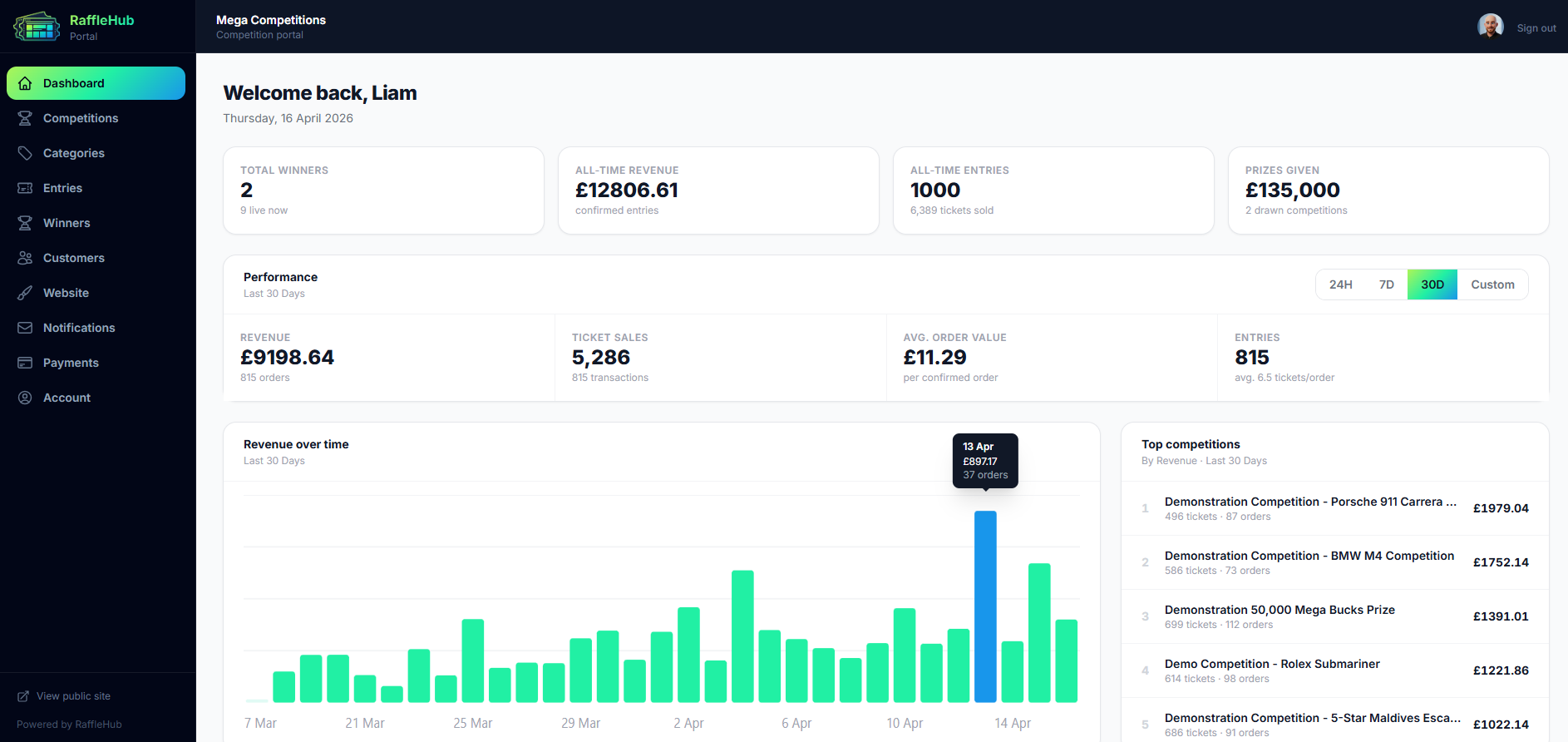
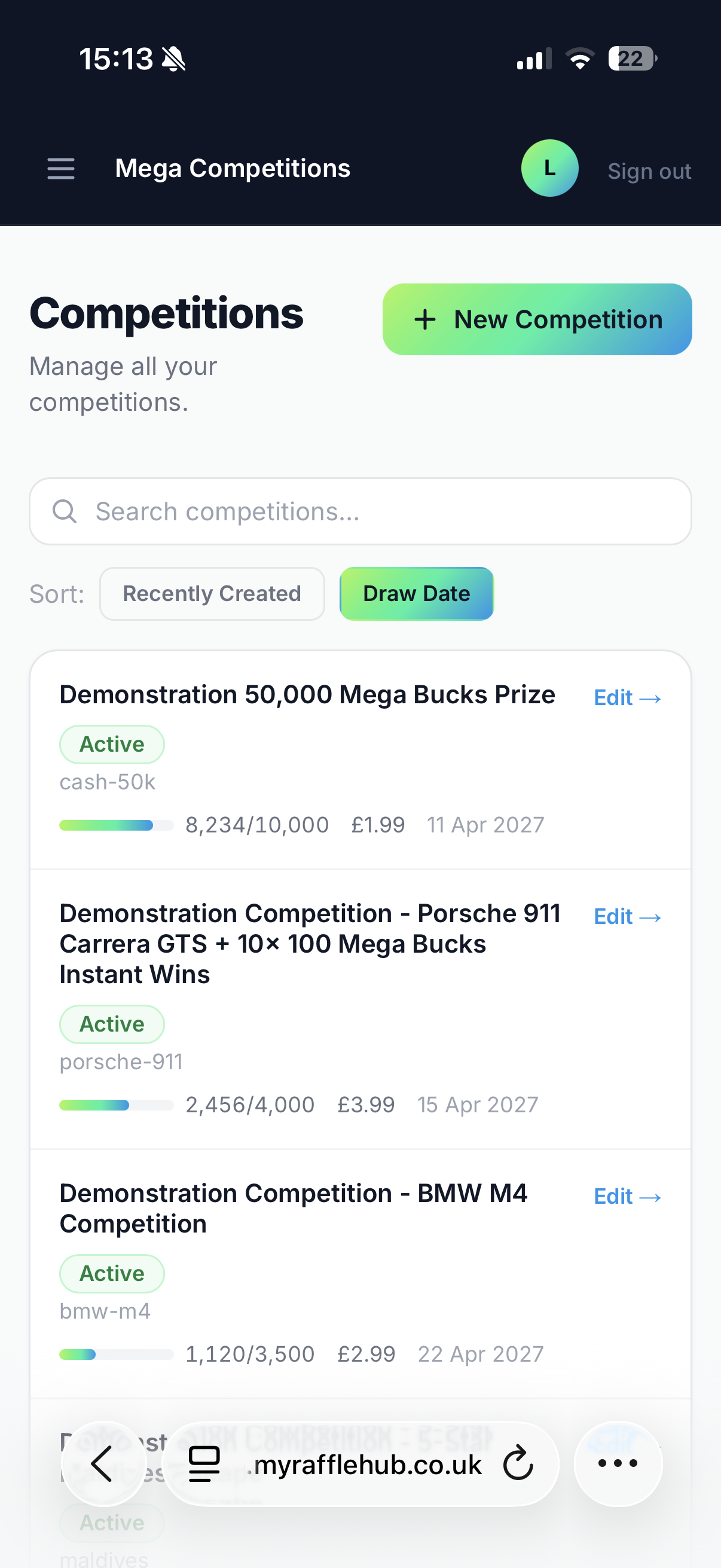
These give you a fully hosted, conversion-optimised competition engine with ticket numbering, ticket caps, instant wins, countdowns, and entry lists built in. You get an admin dashboard for managing competitions, orders, customers, and winners - plus simple controls for logos, colours, and layout. No dev needed for day-to-day operations.
If you have deep pockets and a specific technical vision, custom is fine. If you want to get going without reinventing the wheel, a specialist platform is usually less aggro and significantly faster to launch.
The payment gateway layer - and why the fees matter more than you think
This is where a lot of new operators get a nasty surprise. Payment gateways for competition sites are not the same as standard Stripe or PayPal - most mainstream providers won't touch you. Specialist gateways like Paytriot and Cashflows understand the model, but they charge accordingly.
A typical fee structure might look something like £500 + VAT to set up, plus around 20p per transaction plus 2–3% of the order value. On a low-value order - say, a £10 ticket bundle - that can work out to roughly 33p + 30p (3% of £10), meaning you're clearing around £9.67 from a £10 order before any other costs. That doesn't sound bad, but stack it across a full competition with hundreds of orders and your gateway costs alone become a meaningful line item to track.
This is why checkout smoothness isn't just a UX nicety - every abandoned basket or failed payment is a direct revenue hit, and if your checkout is clunky or slow, you will see higher drop-off rates than a cleaner experience.
What a good competition site must include
Regardless of how you build it, certain features are essential. Sites like Zap Competitions and Reffle.co set a high bar for what customers now expect - anything below that standard starts to look untrustworthy.
- Competition pages. Clear titles, descriptions, images, ticket prices, caps, instant win details, and closing dates. No vague copy, no mystery about what you're actually winning.
- Transparent entry lists. Ideally visible at draw time so entrants can see their ticket numbers and trust the process. This is one of the most effective trust signals you can offer.
- Countdown timers and progress indicators. Obvious signals for how long is left and how many tickets are sold or remaining. Scarcity and urgency are real conversion drivers in this market.
- Instant wins. A popular mechanic where certain ticket numbers trigger an immediate smaller prize alongside the main draw. Done well, it adds gamification and encourages higher basket sizes.
- Admin portal. A back-office view for competitions, tickets, orders, refunds, winners, and customer details. You'll spend a lot of time in here - it needs to be usable, not a spreadsheet nightmare.
- Legals and compliance pages. Dedicated, editable pages for T&Cs, privacy policy, free entry rules, and any age or location restrictions. These need to be findable by visitors, not buried in a footer link nobody clicks.
RaffleHub Competition View

RaffleHub Competition Creation
Payments, performance and peace of mind
The payment layer is tightly regulated and not something you want to bodge. A decent design and tech stack will:
- Integrate with competition-friendly payment gateways such as Paytriot or Cashflows, which typically charge around £500 + VAT upfront plus per-order fees.
- Keep checkout as smooth as possible - minimal steps, clear error messages, and mobile optimisation - to avoid abandoned baskets and failed payments.
- Handle hosting, security, performance, and updates so your site doesn't fall over the first time you have a busy live draw night with a few hundred people hitting it at once.
In short: a clean, trustworthy, fast site doesn't just "look nicer" - it directly affects how many tickets you sell, whether people come back, and whether those hard-won Meta ad clicks actually turn into revenue.