Thinking about starting your own prize competition site but don't fancy learning everything the hard way (and expensively)? Here's a step-by-step walkthrough based on real-world experience - including the bits that most guides gloss over.
Congratulations, by the way, for getting this far. Most people who say they're going to start a competition business have watched one YouTube video, told three friends, and then quietly forgotten about it. The fact that you're actually reading the detail puts you ahead of the majority.
1. Understand your starting costs
Before you run off to buy a Lamborghini for your first draw, it's worth knowing where the non-negotiable costs sit. Based on April 2026 numbers, you're typically looking at:
- Company registration with Companies House: roughly £100.
- Virtual office address: around £38–£40 per quarter (roughly £150/year) with a provider like Icon Offices - more on this below.
- Legal and compliance (proper T&Cs, privacy policy, Meta RMG letter): around £834–£836 including VAT with a specialist solicitor package such as GridLaw.
- Payment gateway onboarding (high-risk merchant): about £500 + VAT (roughly £600 total), plus per-transaction fees on every order.
- Domain name and professional email: around £15.
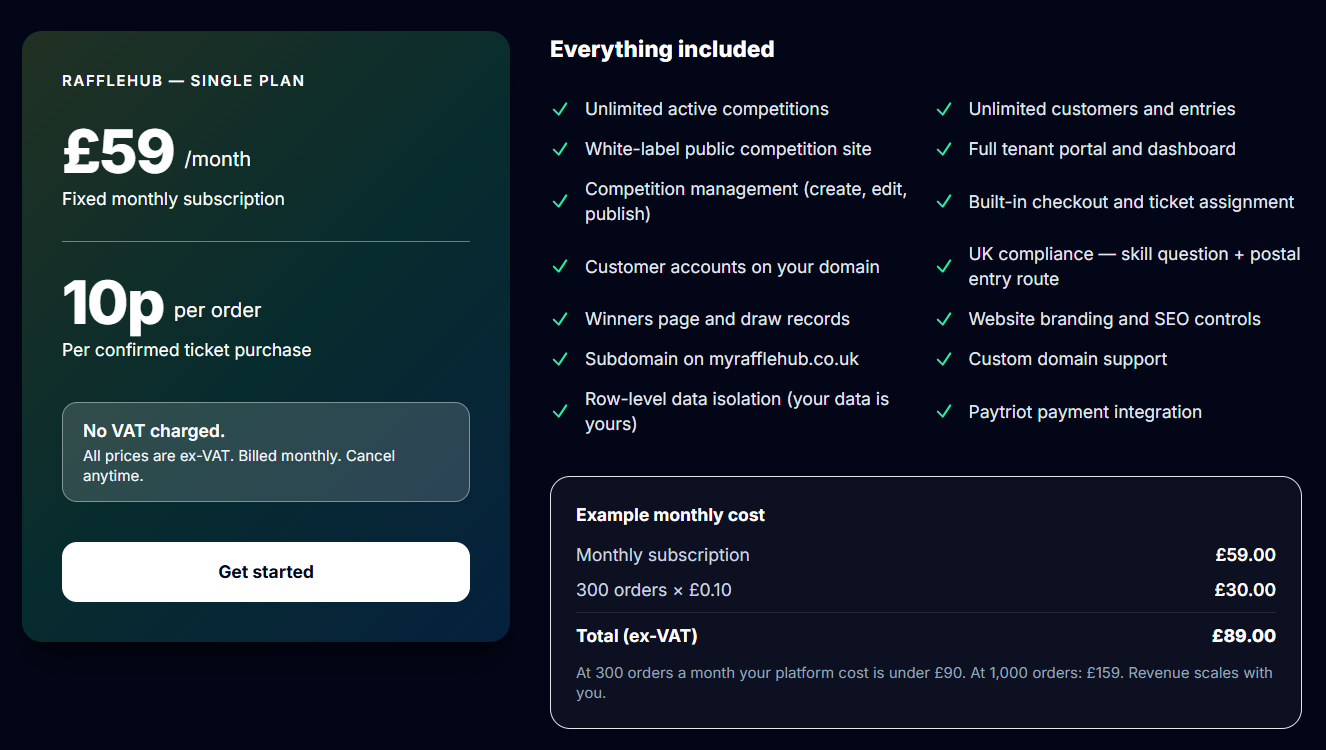
- Website and software: anywhere from ~£59 a month on a dedicated SaaS platform up to several thousand for a custom build (see pricing examples at the bottom of the blog post).
- Initial marketing budget: £1,000–£3,000 minimum to get meaningful data from Meta.
- Miscellaneous extras (stock images, design, etc.): £0–£500.
All in, you're roughly in the £3,000–£11,000 ballpark before you've even worried about the actual prize. Not ideal as a Sunday side hustle if you're skint, but manageable with some planning and a realistic mindset going in.
2. Register your company the smart way
You'll want to run this as a private limited company rather than as a sole trader - both for legitimacy and for how the industry is treated by banks, payment gateways, and potential advertising platforms.
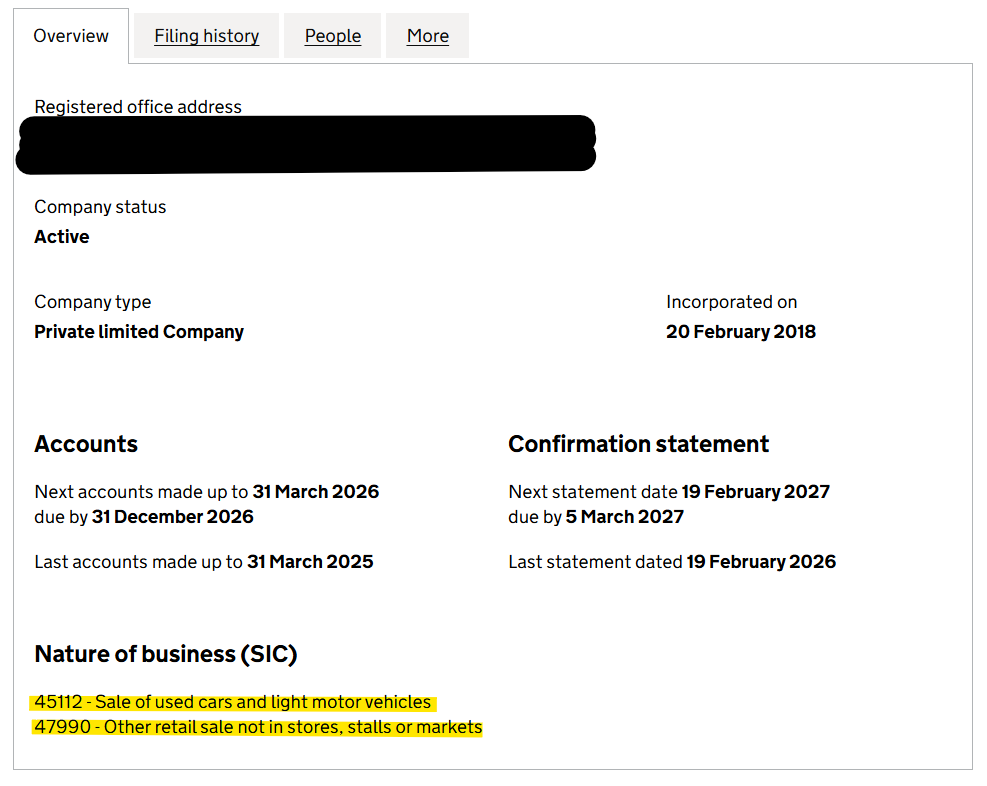
The most important early decision that most guides skip: your registered address. You cannot use your home address if you value your privacy. Companies House publishes your registered address publicly, which means it appears in search engines, on official documents (see the below screenshot), and on your own website's legal pages. Displaying your home address on your T&Cs page is not something most people want.
Use a virtual office address instead. Providers like Icon Offices offer this for around £38–£40 per quarter, with remote mail access so you can view incoming post online. This gives you a professional address, mail handling, and the ability to keep your home off the public register.
- Register your company directly with Companies House (not through a formation agent at a markup) for £100.
- Select appropriate SIC codes - typically 93290 (Other amusement and recreation activities not elsewhere classified) or 47990 (Other retail sale not in stores, stalls or markets). If you're planning car competitions specifically, also add 45112 (Sale of used cars and light motor vehicles). You can have more than one.
- From April 2026, HMRC requires photo ID verification from all new company directors as part of the registration process - make sure you have a valid passport or driving licence to hand.
3. Set up competition-friendly banking and accounting
Mainstream banks are notoriously twitchy about "high-risk" competition websites. Many will simply refuse to open a business account, and others will close accounts down after the fact once they review transaction types. Save yourself the grief and go straight to a competition-friendly option.
- Zempler is widely used in the competition industry. It charges around £9–£10 to open an account, with a free tier for lower volumes and a paid plan at around £19/month for higher transfer needs.
- Link that bank to accounting software such as Xero or QuickBooks, which connect directly to your bank feed and let you categorise transactions without manually entering everything. Introductory offers often start around £8–£15/month.
You can handle your own bookkeeping day-to-day - categorising transactions, tracking prize costs, ad spend, platform fees, and gateway charges - then pay an accountant annually to prepare your year-end accounts and corporation tax return. For a micro-company, this typically costs £500–£1,500 depending on complexity.
4. Build your brand identity
Before anyone sees your prizes, they'll see your brand - so it needs to feel like a real business rather than something knocked up in an afternoon. The good news is you don't need a branding agency.
- Tools like Canva (free tier is fine) let you create a logo, colour palette, and basic brand assets without any design experience.
- If you want something more polished, platforms like Fiverr have specialist logo designers who work in the competition/raffle space for reasonable fees.
- Pick a name that's memorable and available as a .co.uk domain - and check social media handles at the same time. It's frustrating to fall in love with a name and discover the Instagram handle is already a spam account.
Consistency matters: use the same colours, fonts, and tone across your site, social pages, and emails. People recognise brands before they read names, so even a simple consistent palette builds familiarity faster than you'd expect.
5. Choose a niche and your first prizes
Picking "anything and everything" as a niche is basically picking "no niche at all." You end up competing with everyone, spending more on ads to reach a scattered audience, and giving customers no particular reason to come back.
- Start with one niche that matches your interests or knowledge - darts, golf, cars, tech, Pokémon, whisky, whatever you genuinely understand. That understanding helps you write better listings, pick better prizes, and spot opportunities others miss.
- Choose initial prizes that your audience will get excited about, without needing you to remortgage the house. A £300–£500 prize is a perfectly sensible starting point to test demand without huge financial exposure.
- Expect your first competitions to run at a loss or very slim margin as you build trust and a customer base. That's not a failure - it's the cost of getting data and a reputation.
The blunt truth: don't assume ticket sales will definitely cover your prize cost from day one. You need a buffer - and you need to run the numbers before you list the competition, not after.
6. Get your legal and compliance ducks in a row
This is the part where everyone's eyes glaze over, but it's non-negotiable if you want to last more than five minutes. Cutting corners here is how operators end up in trouble with the ASA, Trading Standards, or their payment gateway.
- Structure your competitions with a proper skill-based question (where only correct entries are eligible to win) and a clearly accessible free entry route.
- Have watertight Terms & Conditions and a privacy policy that accurately reflect how you operate - not a generic template you've half-adapted from somewhere else.
- Obtain an RMG (real-money gaming) approval letter from a specialist solicitor if you want to run Meta (Facebook and Instagram) ads. Without this, Meta will eventually flag and restrict your ad account.
- Register with the ICO for data protection purposes - typically around £40–£60 per year for small organisations.
GridLaw (run by David and his team) is widely recommended in the sector and offers a competition legal pack that covers the T&Cs, privacy policy, free entry wording, and the Meta RMG letter as a bundle. Worth every penny compared to patching together generic documents and hoping for the best.
7. Plan your website and tech
Your website is your shop, your sales team, and your reputation - all in one browser tab. You have a few routes:
- Custom build (on WordPress/WooCommerce or a bespoke platform): can start under £1,000 for something basic, but properly integrated setups with a real competition engine, payment gateway, and admin portal typically run to £3,000+. Ongoing maintenance and plugin conflicts are your problem.
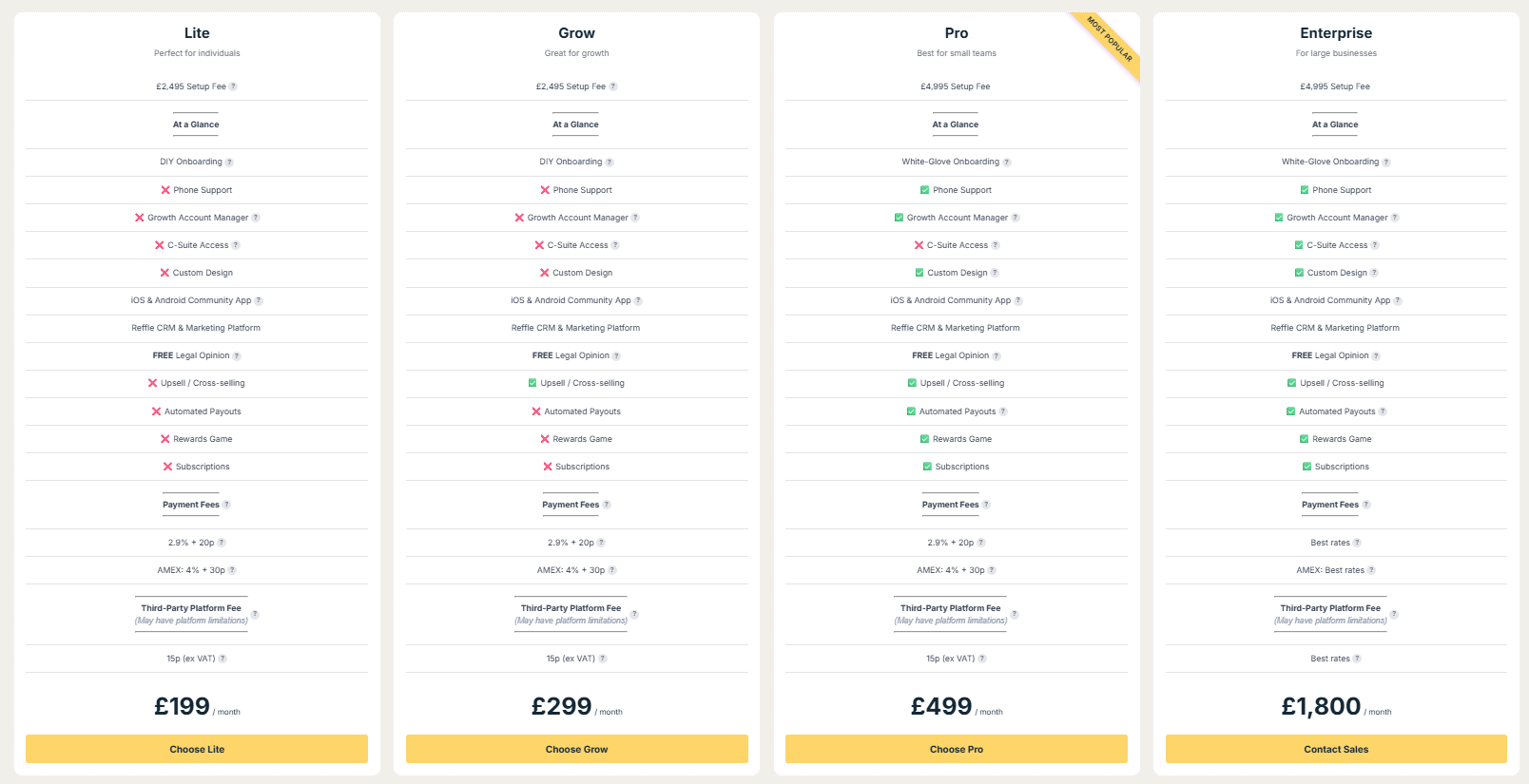
- Dedicated SaaS platform (such as RaffleHub/Reffle): fully hosted, built for competitions, with automated ticket numbering, instant wins, countdowns, entry lists, and an operator dashboard included. You handle configuration, not infrastructure. See the 2 screenshots below for pricing of Reffle and RaffleHub as of April 2026.
Either way, make sure you have:
- A proper competition engine - not just a standard shop checkout with a raffle plugin bodged on top.
- A secure admin area to manage competitions, tickets, winners, customers, and refunds.
- Easy branding controls so you can update your logo, colours, and homepage layout without needing a developer on call.
- Solid payment gateway integration - competition-specific gateways like Paytriot and Cashflows understand the model and won't close your account the first time someone files a chargeback.
When this foundation is in place, you can start thinking about marketing and your first live draw - which, honestly, is where the fun begins.